Table of Contents
Introduction: The People’s Car Gets Even Better
Let me tell you something I’ve watched hundreds of families walk into dealerships over the years, and there’s always that one car sitting in the corner that catches everyone’s eye. It’s not the flashiest. It’s not the most expensive. But it’s the Maruti Suzuki Wagon R, and honestly? It’s been India’s sweetheart for over two decades.
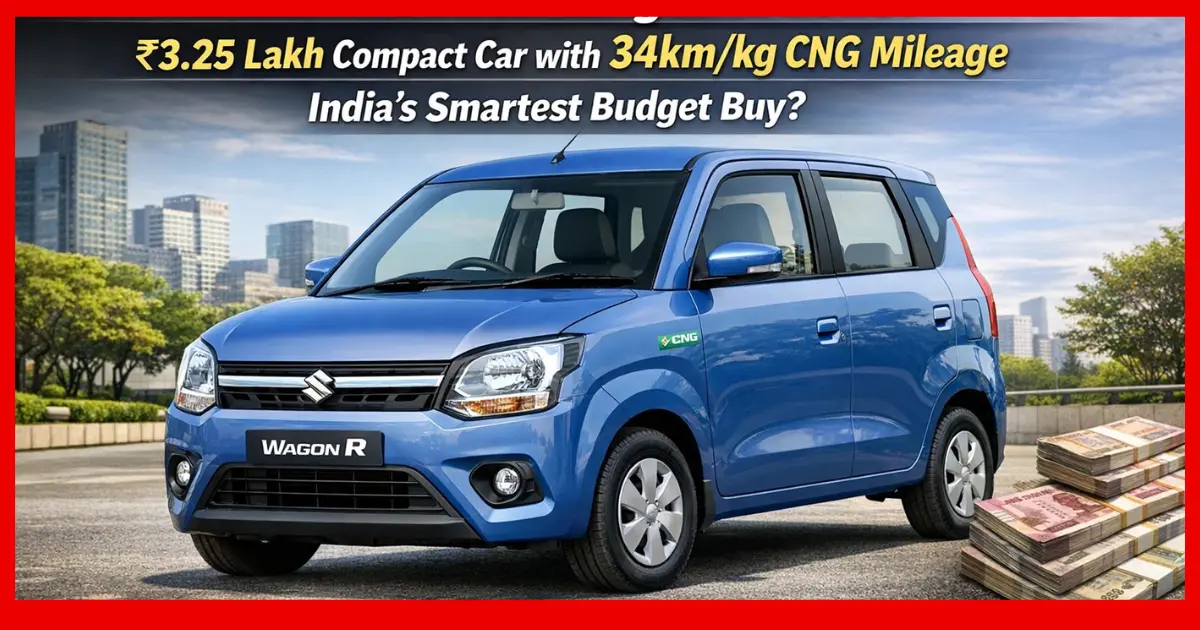
Now, Maruti has just dropped the 2025 Wagon R, and if you’re sitting there wondering whether this boxy little hatchback is worth your hard-earned money, you’re in exactly the right place. With a starting price of just ₹3.25 lakh and promises of 34 kilometers per kilogram on CNG, this could be the smartest decision your wallet makes this year.
Let’s dig in.
What Is the 2025 Maruti Suzuki Wagon R?
Think of the Wagon R as that reliable friend who never lets you down. It’s a tall-boy hatchback that’s been redesigned for 2025 with fresh styling, better features, and here’s the kicker insane fuel efficiency that’ll make your daily commute feel like a breeze.
Under the hood, you’re getting a 1.2-liter petrol engine that balances power and economy beautifully. But the real star? The CNG variant delivering an eye-watering 34km/kg mileage. In a world where fuel prices keep climbing, that’s not just impressive it’s a lifeline.
Why This Launch Matters to You
Here’s the thing most car reviews won’t tell you: choosing the wrong car can drain your bank account for years. Between EMIs, fuel costs, and maintenance, a bad decision today becomes a financial headache tomorrow.
The Wagon R has always been about practicality, but this 2025 version takes it up a notch. With rising petrol prices and the push toward cleaner emissions, the CNG option isn’t just smart it’s necessary. Plus, that starting price of ₹3.25 lakh puts it within reach of first-time buyers, young families, and anyone tired of throwing money at fuel pumps.
What’s New in the 2025 Wagon R?
Engine and Performance
The 1.2-liter K-series petrol engine isn’t new, but it’s proven. You’re looking at smooth city driving, decent highway performance, and the kind of reliability Maruti is famous for. The CNG variant uses the same engine but optimized for gas meaning you sacrifice a tiny bit of power for massive savings.
Mileage That Actually Makes Sense
Let’s be real 34km/kg on CNG is borderline ridiculous (in the best way). If you’re doing 50km daily, you’re spending peanuts compared to petrol or diesel cars. Even the petrol variant promises solid numbers around 25-26 kmpl, which is fantastic for city runabouts.
Features That Surprised Me
The 7-inch touchscreen infotainment system with smartphone connectivity? That’s standard now, not a premium upgrade. You also get power windows, central locking, and improved safety features. No, it’s not loaded with fancy tech like cars double the price, but it covers everything you actually need.
Design Tweaks
The exterior gets subtle refreshes new grille, updated bumpers, and sharper headlamps. It’s not revolutionary, but it looks modern enough to not feel outdated in 2025.
Variant Breakdown and Pricing
| Variant | Engine | Price (Est.) | Key Features |
|---|---|---|---|
| LXI Petrol | 1.2L Petrol | ₹3.25 lakh | Basic features, manual AC |
| VXI Petrol | 1.2L Petrol | ₹4.10 lakh | Touchscreen, power windows |
| LXI CNG | 1.2L CNG | ₹4.15 lakh | 34km/kg mileage, factory-fitted kit |
| VXI CNG | 1.2L CNG | ₹4.95 lakh | All features + CNG efficiency |
Pros and Cons: The Honest Truth
Pros
- Unbeatable CNG mileage – 34km/kg is almost unheard of in this segment
- Affordable starting price – ₹3.25L makes it accessible to budget buyers
- Spacious cabin – Tall-boy design means surprising headroom and comfort
- Maruti’s service network – Get it serviced literally anywhere in India
- Practical features – 7-inch touchscreen comes standard on higher variants
Cons
- Basic interiors – Don’t expect premium materials or luxury vibes
- CNG boot space – The cylinder eats into luggage space significantly
- Not for speed demons – It’s efficient, not exciting to drive
- Limited safety tech – Airbags are there, but no advanced features like ADAS
Who Should Buy the 2025 Wagon R?
If you’re a daily commuter tired of fuel bills, a small family needing reliable transport, or a first-time buyer wanting something sensible this car makes sense. The CNG variant especially is a no-brainer if you drive frequently within city limits.
Skip it if you want a “fun” driving experience or need premium features. This isn’t that car.
FAQs
Q: Is the CNG variant worth the extra cost over petrol?
Absolutely. You’ll recover the price difference in fuel savings within 12-18 months of regular driving.
Q: How safe is the Wagon R?
It comes with dual airbags and ABS as standard, meeting current safety norms. It’s not a 5-star crasher, but solid for the segment.
Q: What’s the waiting period?
Maruti dealerships are reporting 3-6 weeks depending on variant and location. CNG models might take slightly longer.
Q: Can I retrofit CNG later?
You can, but factory-fitted kits (like Maruti’s) are safer, warrantied, and don’t void insurance.
Q: How’s the resale value?
Wagon R holds value exceptionally well thanks to brand reputation and high demand in used markets.
Q: Is maintenance expensive?
Not at all. Maruti parts are affordable, and service costs are among the lowest in India.
Q: Does it have automatic transmission?
Not yet announced for 2025, but typically available in higher petrol variants.
Final Thoughts: Should You Take the Plunge?
Look, the Wagon R isn’t trying to be a BMW. It’s not pretending to be flashy or fast. But here’s what it IS: honest, dependable, and ridiculously economical. In a country where practicality wins over pizzazz, this little box on wheels makes complete sense.
If you’re nodding along thinking “this sounds like exactly what I need,” trust that instinct. Take a test drive this weekend. Your future self and your wallet will thank you.